

Redefining the Croissant: How Artisanal Bakeries Use Heritage Grains in Lamination
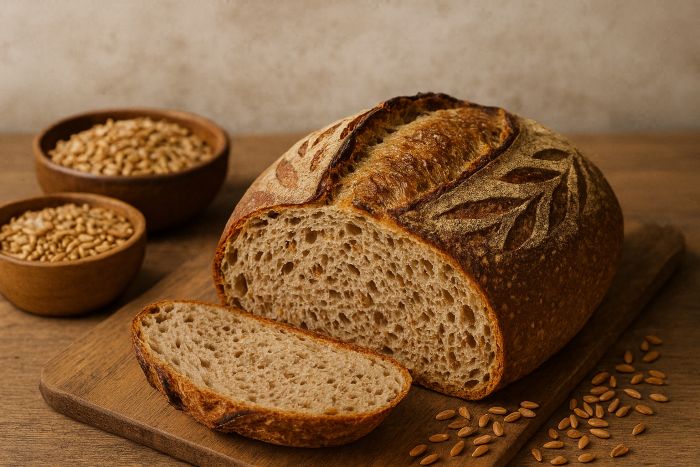
The modern croissant is a triumph of culinary engineering. For decades, the standard recipe has relied heavily on highly refined, predictable roller-milled white flour. This choice is deliberate, as commercial all-purpose or bread flours provide the uniform, high-tensile gluten structure required to hold hundreds of microscopic layers of butter. However, a growing movement of artisanal bakers is rejecting this homogenization by introducing heritage grains into the lamination process.
Lamination involves folding butter into a yeast dough repeatedly to create alternating sheets of fat and flour. When baked, the water in the butter turns to steam, pushing the dough layers upward to create the classic flaky, aerated interior. Utilizing heritage grains for this technique transforms the croissant from a neutral vehicle for butter into a complex pastry with unique structural, nutritional, and flavor profiles.
Understanding Heritage Grains
Heritage grains, or heirloom grains, are ancient varieties of wheat and cereal crops that predated the intensive hybridization programs of the mid-twentieth century. Before agriculture shifted focus to maximizing yield, pest resistance, and high-volume gluten strength for industrialized baking, localized wheat varieties flourished. These grains possess distinct genetic compositions, often translating to complex flavors and higher nutrient density.
Artisanal bakers working with laminated doughs typically select from several prominent heritage varieties:
-
Einkorn: As one of the oldest cultivated forms of wheat, Einkorn features a simple genetic structure. It contains a different type of gluten than modern wheat, making it highly flavorful but notoriously fragile to work with.
-
Emmer: Cultivated extensively in ancient Egypt, Emmer yields a dense grain rich in carotenoids, giving the flour a golden hue and a sweet, nutty taste.
-
Spelt: A more robust ancient grain, Spelt offers a mellow, nutty flavor. While it has a reasonable amount of protein, its gluten is highly extensible but lacks elasticity, meaning it stretches easily but tears under tension.
-
Turkey Red: A hard red winter wheat brought to the American Midwest in the nineteenth century, Turkey Red bridges the gap between ancient grains and modern flour. It provides excellent flavor alongside a robust gluten profile that supports complex bread and pastry structures.
-
White Sonora: A soft white winter wheat with deep roots in the American Southwest, White Sonora offers a mild, buttery flavor and a delicate crumb, making it ideal for pastries, provided it is balanced correctly.
The Chemistry and Mechanics of Heritage Lamination
Shifting from standard commercial flour to heritage varieties introduces variables that challenge the chemistry of lamination. The primary hurdle centers on the quality, rather than the quantity, of the protein present in the flour.
Gluten is formed when two proteins, gliadin and glutenin, hydrate and bind together during mixing. Gliadin provides extensibility, allowing the dough to stretch without snapping. Glutenin provides elasticity, allowing the dough to bounce back and maintain its shape. Standard bread flours feature a perfectly balanced ratio of these proteins, producing a resilient matrix that can withstand the physical pressure of being rolled out repeatedly with heavy blocks of butter.
Heritage grains often suffer from an imbalance in this protein structure. For instance, Spelt and Einkorn possess high levels of gliadin but very little glutenin. When a baker attempts to laminate a pure heritage dough, the mixture stretches effortlessly but lacks the structural integrity to support the expanding steam during baking. The result can be a heavy, collapsed pastry rather than a light, voluminous croissant.
To counter this, bakers carefully calculate hydration levels and enzyme activity. Heritage flours are frequently milled fresh on stone mills, preserving the germ and bran. While this adds exceptional flavor and micronutrients, the sharp edges of the bran act like tiny razor blades, cutting the fragile gluten strands during mixing and rolling. Furthermore, whole heritage grains absorb significantly more water than refined flours, requiring the baker to adjust the formula to prevent the dough from becoming too sticky or too stiff to roll out uniformly with the butter layer.
Technical Adjustments in the Artisanal Bakery
Successfully integrating heritage grains into a laminated dough requires systematic adjustments to temperature, fermentation, and mechanical handling. Most bakeries choose to blend heritage flour with high-quality, organic unbleached bread flour rather than using one hundred percent heritage grain. A blend containing twenty to forty percent heritage flour allows the baker to inject distinct flavor notes and colors into the pastry while relying on the modern flour to provide the structural safety net required for the lamination process.
Temperature Control and Fat Management
Maintaining strict temperature control is paramount. Because heritage doughs are physically weaker, they are highly susceptible to warming up during the rolling process. If the dough warms beyond a specific threshold, the butter begins to melt and absorb directly into the flour layers, a failure known as breading out. When this happens, the distinct layers vanish, and the croissant bakes up like a brioche roll instead of a flaky pastry.
Bakers utilize extended resting periods in refrigeration units or blast chillers between folds to keep both the fat and the dough at identical temperatures. The goal is to keep the butter plastic, meaning it is pliable enough to roll out smoothly without snapping or melting into the surrounding dough.
Fermentation Strategies
Fermentation must be monitored with precision. The wild yeasts and enzymes present in whole-grain heritage flours accelerate fermentation speeds. While a long, cold fermentation period is desirable to build depth of flavor, over-proofing a heritage grain croissant can completely degrade the fragile protein structure. Acid accumulation from extended sourdough fermentation can weaken the gluten network to a point where the layers collapse in the oven. Artisanal bakers often utilize a hybrid approach, combining a small amount of commercial yeast for reliable lift with a sourdough poolish or levain to capture the complex acids and enzymatic benefits of the heritage grain.
Flavor Profiles and Sensory Characteristics
The ultimate reward for navigating the technical difficulties of heritage grain lamination lies in the sensory profile of the finished product. Standard white-flour croissants rely almost entirely on the quality of the butter for their flavor. While butter remains a critical component in heritage lamination, the grain itself steps into the spotlight.
Croissants made with Turkey Red or Emmer display a deep, caramelized crust color when baked, accompanied by aromas of toasted malt, hazelnuts, and dark honey. The interior crumb is rarely stark white; instead, it exhibits warm cream, tan, or even slight reddish tones.
The texture undergoes a transformation as well. While the exterior retains its shatteringly crisp behavior, the interior honeycomb structure offers a more substantial, satisfying chew. The presence of whole-grain components gives the pastry a cleaner finish on the palate, offsetting the heavy, greasy mouthfeel that can sometimes accompany mass-produced, highly refined croissants.
Frequently Asked Questions
Why does stone-milled heritage flour behave differently than roller-milled flour in pastries?
Rolal-milling completely separates the endosperm from the bran and germ, resulting in a highly stable, white flour that consists almost entirely of starch and protein. Stone-milling grinds the entire kernel together, preserving the nutrient-dense germ and fiber-rich bran. The presence of the bran alters water absorption and physically interferes with gluten development, requiring bakers to modify their handling techniques.
Does using heritage grains make croissants healthier?
While croissants remain an indulgent, butter-rich pastry, heritage grains introduce higher levels of dietary fiber, vitamins, and minerals compared to refined white flour. Many ancient grains also possess a simpler gluten structure that some individuals find easier to digest, though they are still unsuitable for anyone with celiac disease.
Can you make a successful croissant using one hundred percent ancient grains?
It is possible, but it requires highly specialized techniques, such as utilizing ancient grains that have been naturally sprouted or using advanced temperature control to manage the weak gluten. Pastries made with one hundred percent ancient grains like Einkorn generally have a much denser crumb structure and lower volume than traditional croissants.
How do heritage grains affect the shelf life of a croissant?
The whole-grain components and natural oils found in heritage flours help retain moisture more effectively than refined flours. Consequently, heritage grain croissants often maintain a tender interior crumb for a longer period after baking, though the exterior crispness will still diminish over time due to ambient humidity.
Does the choice of butter change when working with heritage flours?
Bakers generally prefer European-style butter with a higher butterfat content, typically eighty-two percent or higher, for all lamination. When paired with heritage grains, selecting a cultured butter is even more beneficial. The subtle tang of cultured butter complements the earthy, nut-like qualities of ancient grains far better than standard sweet cream butter.
How does the baking temperature change for heritage grain croissants?
Heritage grains contain higher levels of natural sugars and carotenoids, which cause them to brown much faster than refined white flour. To prevent the exterior from burning before the interior layers have fully baked and dried out, bakers often lower the oven temperature slightly and extend the total baking time.


