The Science of Salting: When and How to Season Your Food
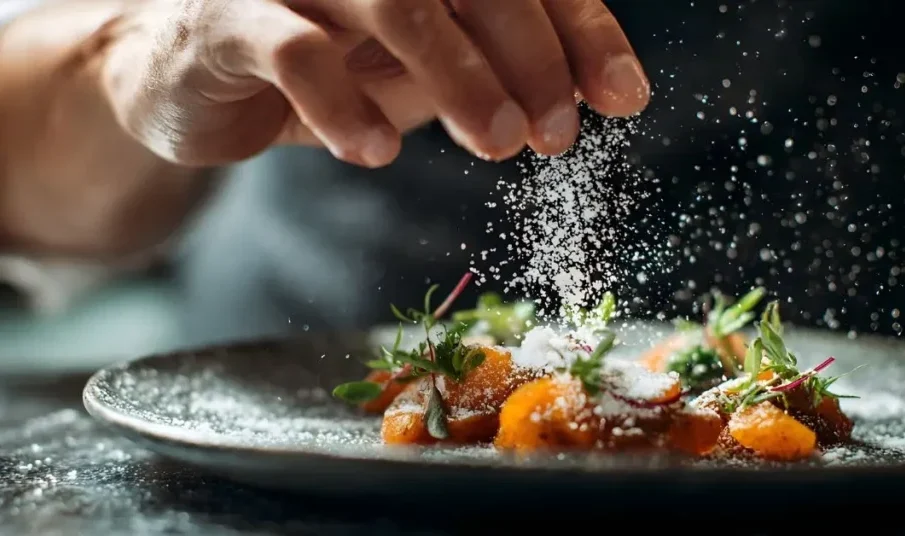
Salt is arguably the single most important ingredient in the culinary world. While many view it merely as a condiment to add at the table, its actual role in cooking is deeply rooted in chemistry and physics. When used correctly, salt does not simply make food taste salty; it functions as a powerful flavor enhancer, texture modifier, and structural agent.
Understanding the science behind sodium chloride can elevate home cooking from mediocre to professional. To master this foundational skill, cooks must look past basic recipes and examine how salt interacts with organic compounds on a molecular level, as well as the precise physical timing required for optimal results.
The Biological and Chemical Role of Salt
To understand why food needs salt, it helps to examine how human taste buds interact with flavors. Human tongues are hardwired to detect five primary tastes: sweet, sour, salty, bitter, and umami. Salt acts as a universal flavor modulator by altering the volatility of flavor compounds in food and changing how our brains perceive taste signals.
Suppressing Bitterness and Enhancing Sweetness
One of the most remarkable chemical properties of salt is its ability to suppress bitterness. When sodium ions come into contact with taste receptors, they physically block the chemical signals that transmit bitter tastes to the brain. By muting bitterness, salt allows other flavors, particularly sweetness and sourness, to shine through. This is why a pinch of salt makes a bitter cup of coffee taste smoother, balances the acidity of tomato sauce, and enhances the natural sweetness of dark chocolate or fresh fruit.
Volatilizing Aromas
Taste is only one half of the eating experience; the other half is smell. Olfactory receptors in the nose detect volatile aroma compounds released as we chew. Sodium chloride increases the volatility of these aromatic compounds, forcing them out of the food matrix and into the air inside the mouth, where they travel up to the nasal cavity. This chemical reaction essentially makes food smell and taste more intense and distinct.
Choosing Your Tool: The Anatomy of Salt Crystals
Not all salt is created equal. While chemical formulas remain largely identical across standard culinary salts, physical structure varies wildly. The size, shape, and density of a salt crystal determine how quickly it dissolves and how easy it is to distribute evenly over food.
-
Table Salt: This variety features highly compressed, dense, uniform cubic crystals. Because the grains are tiny and tightly packed, table salt contains roughly twice the salting power by volume compared to flaky salts. It often contains anti-caking agents like silicon dioxide and added potassium iodide, which can impart a subtle, metallic aftertaste to delicate foods.
-
Kosher Salt: The preferred choice for professional chefs, kosher salt features large, coarse, irregular crystals. These hollow shapes make it highly malleable and easy to pinch with fingers, allowing for precise control when seasoning meat or vegetables. It dissolves cleanly and rarely contains additives.
-
Sea Salt: Harvested by evaporating seawater, sea salt can range from fine grains to large, pyramid-shaped flakes. It retains trace minerals like magnesium, calcium, and potassium, which offer subtle regional flavor profiles. Due to its unique texture and high cost, coarse sea salt is typically used at the very end of cooking to provide a deliberate, crunchy burst of flavor.
The Chronology of Seasoning: When to Salt
Timing is the defining factor in the science of salting. Adding salt at the beginning of the cooking process yields a radically different result than shaking it over a finished dish right before consumption.
Salting Meat: The Dynamic of Osmosis
When you apply salt to raw meat, you trigger a multi-stage physical reaction driven by osmosis, which is the movement of water across a semipermeable membrane from an area of low solute concentration to high solute concentration.
Initially, the salt draws moisture out of the meat cells, forming a concentrated pool of brine on the surface. If you cook the meat at this exact moment, you will dry it out and end up with a tough texture. However, if you wait twenty to forty minutes, a second phase begins. The concentrated salt brine begins to break down the tightly wound muscle proteins, specifically myosin. As these protein filaments relax, they become porous, allowing the seasoned liquid to be reabsorbed deep into the core of the muscle fibers.
Salting meat well in advance ensures that every bite is seasoned throughout, rather than just on the surface. Furthermore, relaxed muscle fibers retain more moisture during the cooking process, resulting in a juicier final product.
Salting Vegetables: Managing Water Content
For vegetables, salt serves as a tool to draw out excess moisture or tenderize rigid cellular structures.
-
Before Cooking: Salting water-logged vegetables like eggplants, zucchini, or cabbage before cooking draws out excess moisture through osmosis. This prevents the vegetables from steaming in their own juices when placed in a hot pan, allowing for proper browning and caramelization.
-
During Cooking: Adding salt directly to mushrooms or onions early in the sauté process coaxes out their water, causing them to collapse and soften faster.
-
Boiling Water: When cooking green vegetables or pasta, the water should be heavily salted. For vegetables, the sodium ions help preserve chlorophyll and strengthen the pectin structural boundaries, keeping greens vibrant and crisp. For pasta, it is the only opportunity to season the dough from the inside out as it hydrates and expands.
How to Salt: Technique and Precision
Proper execution requires abandoning the salt shaker in favor of using your hands. This physical connection grants the cook direct control over volume and distribution.
Seasonal Stratification: Layering Salt
Professional cooking relies on the concept of layering salt throughout the entire cooking process. Rather than dumping a massive amount of salt into a stew at the very end, add small, calculated pinches at every stage: when sweating the aromatics, when searing the proteins, and when simmering the liquid. This gradual integration allows flavors to marry and prevents the sharp, stinging taste of raw, undissolved salt at the end.
Physical Distribution: Height Matters
When seasoning a large piece of protein or a tray of roasted vegetables, release the salt from at least ten to twelve inches above the food. Gravity allows the individual crystals to separate and spread naturally as they fall, ensuring an even layer of seasoning across the entire surface area. Lowering your hand too close to the food results in concentrated patches of over-salted spots alongside completely unseasoned gaps.
Frequently Asked Questions
Why does a dish sometimes taste flat even after adding plenty of salt?
A flat taste usually indicates a lack of acid rather than salt. Salt enhances existing flavors, but it cannot provide brightness. If a dish still tastes dull after proper salting, adding a splash of lemon juice, lime juice, or vinegar will activate different taste receptors and wake up the overall flavor profile.
Can you use kosher salt and table salt interchangeably in baking recipes?
No, you cannot swap them one-for-one by volume. Because table salt crystals are tiny and dense, a single tablespoon of table salt weighs nearly twice as much as a tablespoon of coarse kosher salt. Swapping them without weighing them will result in baked goods that are either intensely salty or completely under-seasoned. Always convert to weight measurements for precision in baking.
Does adding salt to water really make it boil faster?
Technically, adding salt raises the boiling point of water, a phenomenon known as boiling-point elevation. This means salted water actually takes slightly longer to reach a boil, but it will boil at a higher temperature, which can marginally speed up cooking times. However, the amount of salt used in everyday cooking is so small that the difference in time is completely imperceptible.
Why do beans take longer to soften if you salt the cooking water too early?
This is a persistent culinary myth. Salting the soaking or cooking water actually helps beans soften faster and prevents their skins from bursting. The sodium ions in the water displace magnesium and calcium ions in the bean skins, making the exterior coat more permeable and allowing water to penetrate the interior evenly.
How do you salvage a soup or sauce that has been heavily over-salted?
The most reliable method is dilution. Add more unsalted liquid, such as water, stock, or crushed tomatoes, to expand the total volume of the dish and lower the sodium concentration. Alternatively, adding a starch like rice or potatoes can absorb some liquid, but you will still need to add more unseasoned components to balance the overall flavor ratio.
What is the purpose of using a finishing salt right before serving?
Finishing salts feature delicate, large, crunchy crystals that do not dissolve instantly. They are applied immediately before consumption to provide a deliberate contrast in texture and a sudden, bright burst of clean salinity that cuts through rich ingredients like steak, roasted potatoes, or chocolate ganache.